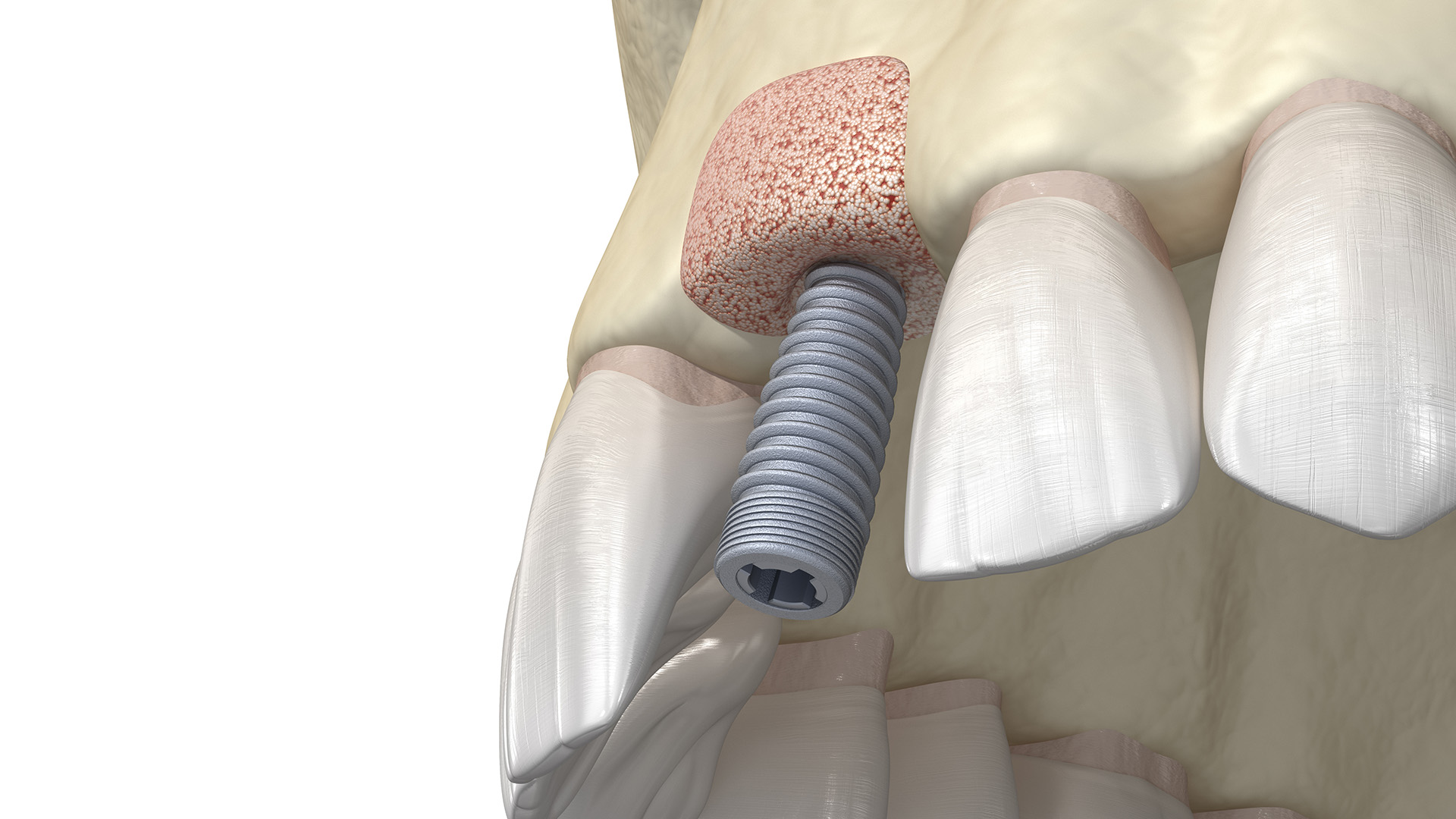
Bone grafting is a reliable way to rebuild or preserve jawbone so your teeth, gums, and any future restorations have strong support. Whether you are planning for a dental implant, addressing bone loss after an extraction, or restoring areas affected by gum disease, bone grafting helps protect function, comfort, and your smile’s appearance. Understanding why you may need bone grafting can clarify how it supports long-term oral health and candidacy for treatments like implants.
What Is Bone Grafting?
Dental bone grafting adds or preserves bone in the jaw to create a stable foundation for implants, maintain facial contours, and support healthy teeth and gums. It is a common bone graft in dentistry performed in three scenarios: along the jaw ridge to widen or heighten bone, in fresh extraction sites to preserve the socket after a tooth is removed, and in the back upper jaw through a sinus lift to create space and density for implants.
Several graft materials are available and selected based on your needs:
- Autograft: Your own bone, often from a small donor site such as the chin, with excellent biocompatibility.
- Allograft: Processed donor bone from a human source, prepared to be safe and effective.
- Xenograft: Bone from an animal source, typically bovine, acting as a scaffold your body replaces over time.
- Synthetic: Man-made materials that stimulate bone growth and provide structure.
Grafts work by acting as a scaffold for your body’s cells. Over time, your natural bone replaces or integrates with the graft in a process similar to osseointegration. Early healing begins within weeks, but most grafts require three to six months to reach the stability needed for a bone graft for dental implants to support placement. Larger augmentations or sinus lifts may take six to nine months before final restorations are completed. Understanding why you may need bone grafting helps set expectations for this timeline.
Common Reasons You May Need Bone Grafting
- After a tooth extraction: When a tooth is removed, the surrounding ridge naturally resorbs because it no longer receives chewing stimulation. This shrinkage can begin within weeks and continue over time, reducing suitability for implants and affecting facial contours. Socket preservation with a bone graft in dentistry at the time of extraction helps maintain volume and shape.
- Periodontal disease or infection: Gum disease can break down the bone that supports teeth. After treating infection, a graft may be recommended to rebuild lost support, stabilize teeth, and improve future treatment options, including a bone graft for dental implants or bridges.
- Insufficient bone for implants: If the jaw is too thin or low to anchor an implant securely, ridge augmentation can add width or height. In the upper back jaw, a sinus augmentation lifts the sinus membrane and places graft material to create adequate height for implants and is a frequent reason why you may need bone grafting.
- Orthodontic support or ridge defects: Selective grafting can assist tooth movement or correct localized defects along the ridge to improve long-term stability and aesthetics.
What to Expect During Treatment
Your visit begins with a comprehensive evaluation that typically includes digital X-rays and 3D cone beam imaging to assess bone height, width, density, sinus anatomy, and nerve locations. Your provider will review your medical history, discuss timing with extractions or implants, and outline material options so you can make an informed choice about a bone graft in dentistry.
Several approaches may be used depending on your needs:
- Socket preservation: Immediately after tooth removal, graft material is placed into the empty socket and often covered with a resorbable membrane to protect healing.
- Ridge augmentation: Graft material is added along thin or uneven areas of the jaw to rebuild width or height and improve future implant stability.
- Sinus lift: In the upper jaw, the sinus membrane is gently raised and graft material is placed to increase vertical bone for implants.
In some cases, a dental implant can be placed at the same time as the graft. In other situations, the graft heals first and the implant is placed later. Local anesthesia keeps the area numb during the procedure, and sedation options are available when appropriate. Many grafts take 45 to 90 minutes, depending on complexity. Most patients return to normal activities within a day or two, with initial soreness improving over several days. Follow-up visits are scheduled to monitor healing, and imaging is repeated before planning implant placement or final restorations, especially when a bone graft for dental implants is part of the plan.
Risks, Benefits, and Recovery
As with any surgical procedure, potential risks include infection, graft exposure or failure, and temporary nerve irritation or sinus discomfort in upper jaw procedures. These risks are minimized through careful planning with 3D imaging, sterile technique, appropriate antibiotic or rinse protocols, and detailed home-care instructions. Selecting the right graft material and timing also supports success when considering why you may need bone grafting.
The benefits of bone grafting are significant. Rebuilding bone provides long-term support for oral health, allows for implant placement in sites that would otherwise be unsuitable, and improves function and aesthetics. Preserving ridge shape can help maintain facial contours and make future treatment more predictable, particularly when a bone graft in dentistry is used to stabilize areas before implants.
After your procedure, you will receive clear instructions for pain management, swelling control, and oral hygiene. Most patients manage discomfort with over-the-counter medication, cold compresses for the first 24 to 48 hours, and a soft diet. Keep the surgical site clean with gentle rinsing as directed and avoid smoking, vigorous spitting, or using straws, which can disrupt healing. Stitches may dissolve on their own or be removed at a follow-up visit. Expect initial soft tissue healing in one to two weeks, early bone maturation at six to eight weeks, and full graft integration by three to six months. Contact your provider if you notice increasing pain or swelling after the first few days, fever, persistent bleeding, bad taste or drainage, or any change in sensation.